Is Cursor IDE Safe for Production? Security Breakdown for Founders
Cursor crossed 1 million users in early 2025. By mid-year, it was generating around $500M ARR and shipping into the workflows of teams at NVIDIA, Uber, and Adobe. Engineers love



Cursor crossed 1 million users in early 2025. By mid-year, it was generating around $500M ARR and shipping into the workflows of teams at NVIDIA, Uber, and Adobe. Engineers love

A developer spends a week building a multi-tenant permission system using Claude Code or GitHub Copilot. The automated code review tools scan it — Snyk, Semgrep, the GitHub Advanced Security suite. Everything
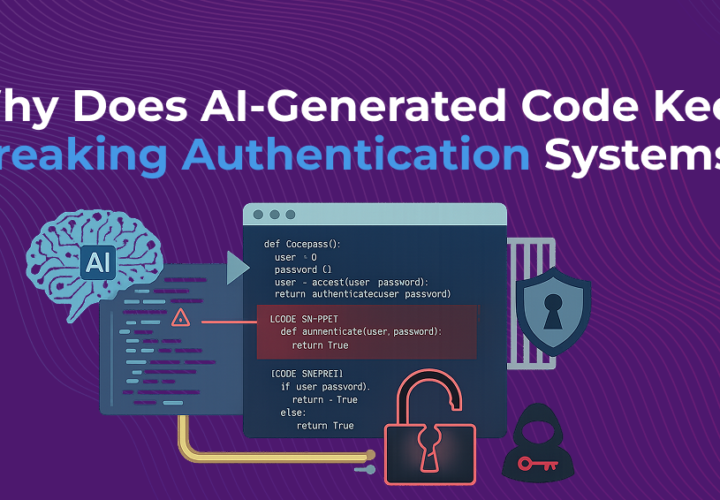
Your AI wrote the login system in four minutes. Impressive. Now here’s the uncomfortable question: did it build a door — or leave a hole in the wall? Broken authentication

KEY TAKEAWAYS Veracode’s 2025 GenAI Code Security Report found AI-generated code contains 2.74x more vulnerabilities than human-written code across 100+ LLMs tested — (source) The OWASP Top 10 for LLM Applications 2025 is the definitive security

KEY TAKEAWAYS • Organizations without AI code governance policies paid $670,000 more per breach on average (IBM, 2025 Cost of a Data Breach Report) • AI-generated code requires 15–25% rework
You used Cursor and Claude Code to build your MVP in 4 days. It demoed perfectly. Investors were impressed. You onboarded your first 200 users. Now it’s three weeks into

A three-person startup shipped a fintech SaaS in nine weeks. Every line of backend code was generated by Claude Code. The product worked. Users were signing up. Investors were interested.
Two AI coding tools dominate the conversation right now. Claude Code is Anthropic’s command-line coding agent. OpenClaw is the open-source AI assistant that exploded past 200,000 GitHub stars in weeks. Both promise to change

You gave Claude Code a well-structured prompt. The output looked clean. Tests passed. Linting found nothing. Your team reviewed it briefly and shipped it. Three weeks later, during a routine

KEY TAKEAWAYS 45% of AI-generated code contains at least one security flaw that would fail a standard security audit 62% of AI code solutions contain design flaws or known vulnerability

KEY TAKEAWAYS • 45% of AI-generated code contains at least one security vulnerability—most go undetected before production • Claude Opus 4.5 Thinking, the most capable model available, produces secure code


